![]() |
![]() |
||||
| Organic Sci. Cluster | About Us | Top 10 | Français | ||
| British Columbia | Alberta | Saskatchewan | Manitoba | ||
| Ontario | Québec | Atlantic | Donate | ||
| Research
Extension
Courses
Consumers
-------------------------- |
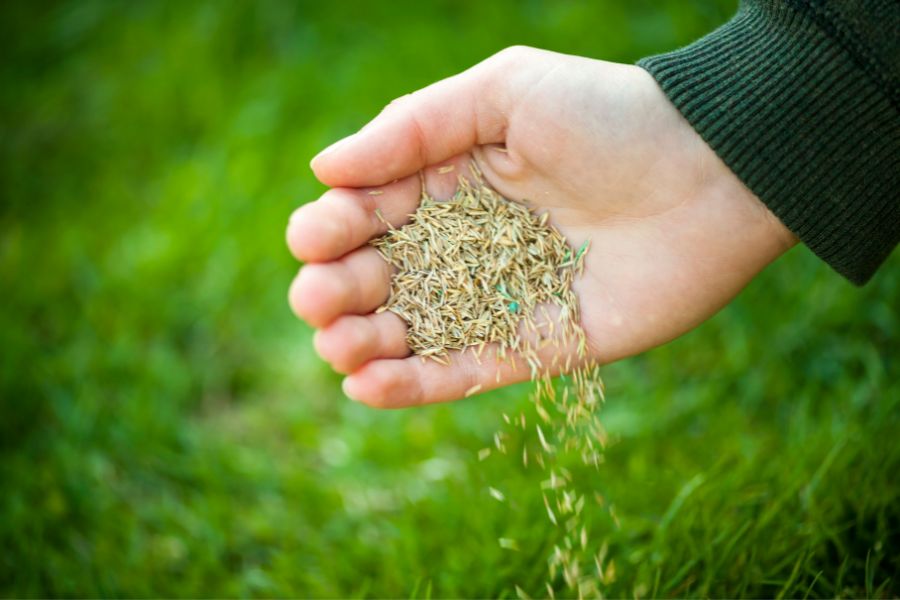
Wheat - Weed Interactions at Variable Seeding Rates in Organic Farming SystemsRoxanne Beavers, Dr. Andy Hammermeister, and Dr. Ralph Martin Many organic producers seed grains at higher rates than is recommended for conventional production. At higher seeding rates the grain crop is expected to make more efficient use of resources than it would at lower seeding rates, and is also expected to become a stronger competitor with weeds. The improved weed competition at increased seeding rates is a result of fewer resources being available for the weeds, putting them at a competitive disadvantage and reducing their seed production. However, the response has been observed only with large differences in seeding rates, and will vary with the environmental conditions and with the species of weed present. Increased seeding rates can also affect crop yields, and extensive research has been done on this aspect of grain production in conventional farming systems. In general there is no yield benefit from increasing seeding rates beyond current recommended levels in conventional production, as the crop will compensate for higher plant densities by reducing other yield components (e.g. the number of tillers or the number kernels per head). However, weed control is a major issue for organic crop production and more information is needed in order to fully evaluate potential tradeoffs between weed control and yields in organic systems. Therefore, researchers at the Organic Agriculture Centre of Canada and the Nova Scotia Agricultural College are conducting a 2-year trial with spring wheat, to determine whether increasing the seeding rate is an effective means of weed control in an organic system. The study will also evaluate the impact of increased seeding rates on yield and quality in organic grain crops. Five different seeding rates will be evaluated on the variety AC Helena:
In addition, the plots will receive either 0 or 10 t/ha of pelletized chicken manure to determine if wheat-weed interactions or crop response differs with increased nutrient availability. Throughout the growing season data will be collected on:
The summer of 2003 is the first season of the trial and so far differences can be seen between the fertilized and non-fertilized plots, and among the different seeding rates. The fertilized plots are generally weedier than the unfertilized plots, whereas the plots with higher seeding rates have fewer weeds than those with lower seeding rates. However, at this point it is difficult to predict which plots will have the highest yields. Data will be collected over a second growing season, and results will available by April 2005. The results will be posted as they become available. Roxanne Beavers (MSc student), Dr. Andy Hammermeister, and Dr. Ralph
Martin Funding Partners: National Sciences and Engineering Research Council (NSERC). |
||||
© 2010, Organic Agriculture Centre of Canada (OACC)