Organic Agriculture Centre of Canada (OACC) OACC - Organic Agriculture Centre of Canada
OACC homepage

Reducing Erosion Potential on Organic Farms

By Brenda Frick, Ph.D.

Soil conservation is crucial to the sustainability of agriculture.

Organic producers, in particular, take this responsibility seriously. According to the International Federation of Organic Agriculture Movements, "soil and soil management is the foundation of organic production. Organic growing systems are soil based, care for the soil and surrounding ecosystems and provide support for a diversity of species, while encouraging nutrient cycling and mitigating soil and nutrient losses."

Soil is a complex and living system. Caring for the soil, then, is caring for the life of the soil. Reducing erosion is a fundamental first step in caring for soils.

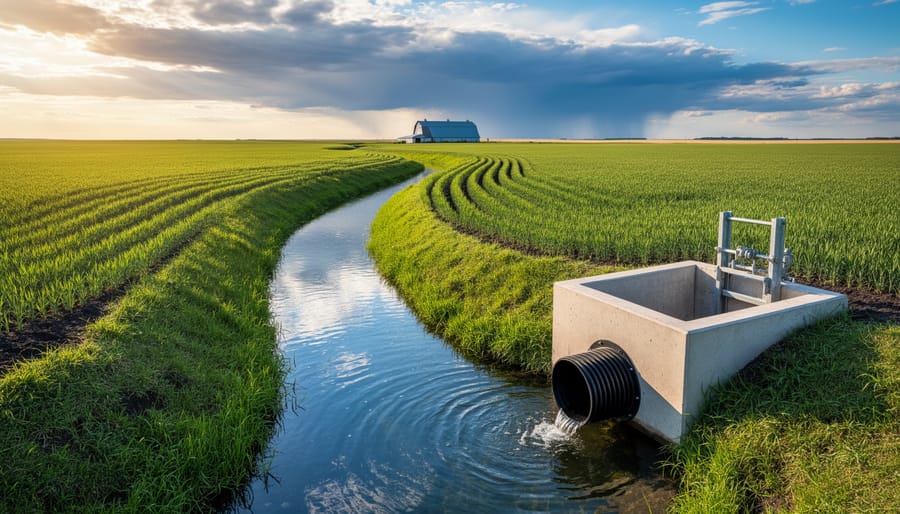
Wind and water are the agents of erosion. Reducing wind and water speed can reduce erosion potential. Using narrow fields, shelterbelts, perennial grass barriers, and even annual crop barriers can be helpful in reducing the movement of wind and water across fields.

Reducing tillage is the method most commonly advocated for reducing erosion potential. Tillage increases erosion potential by pulverizing soil aggregates and making particles small enough to be easily carried by wind or water. Tillage also reduces surface residues that protect soil. Reducing tillage involves reducing the number of tillage passes, the speed of the tillage operation, and/or the depth of the soil penetrated by the tillage implement.

Reducing tillage can be particularly challenging for organic producers. For conventional producers, reduction in tillage often goes hand in hand with herbicide use in spring or fall. In grasshopper prone times at least, tillage reduction can increase insecticide use as well. Never the less, many organic producers are experimenting with reductions in tillage frequency or intensity. More research in this area would be helpful.

Reducing soil losses in organic systems hinges, as so much in organic agriculture does, on sound crop rotations. Maintaining vegetative cover on the land and increasing soil organic matter are key elements. Soils that are covered with plant material, living or dead, are less susceptible to erosion. The benefits of soil organic matter are numerous: it is the source of most of the nitrogen, and of phosphorous and sulfur that is available for plants to take up; it is a food source for the life of the soil, with all its beneficial activities; it helps soil hold water, allows air flow and binds soil together in larger aggregates. This last benefit is perhaps the most important for reducing erosion.

Rotations that reduce erosion are therefore likely to be those that most increase organic matter, and lessen the time that the ground is left uncovered. Replacing summerfallow with cover crops, especially those that produce abundant biomass, or legumes, with a good balance of nitrogen and carbon in their residues, is highly recommended. On highly erodible land, seeding long term forages or permanent cover may be beneficial.

Alison Nelson is a graduate student at the University of Manitoba, working under the direction of Dr. Jane Froese. Her research examines crop rotations in Canada, and asks how these rotations influence soil conservation. The first part of her project characterizes organic rotations, and practices that producers use to reduce soil loss. She has developed a survey for producers that she estimates that will take about 45 minutes per producer. She hopes to find 200 willing participants, and welcomes your participation.

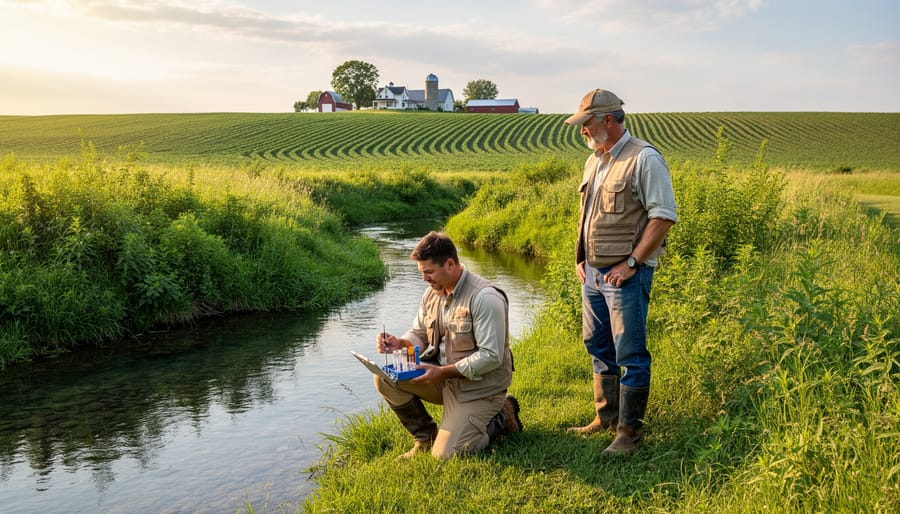
The second part of her project involves actually visiting farms and measuring the soil's resistance to erosion. She will visit farms that she identifies by the survey as representative of the rotational practices she discovers. The two parts of her project, taken together, will help her to identify effective soil conservation practices for organic producers, practices that allow them to be even more effective stewards of the soil.

Brenda Frick, Ph.D., P.Ag., is the Prairie Coordinator for the Organic Agriculture Centre of Canada at the College of Agriculture, University of Saskatchewan. She welcomes your comments at 306-966-4975 or via email at brenda.frick@usask.ca .

To obtain a copy of the survey, contact Brenda, or contact Alison Nelson directly at 204-474-6073 or by email at umnels06@umanitoba.ca

Citations:

Foster, K and B Green. 1996. Organic Crop Production: Soil Conservation Practices. Saskatchewan Agriculture and Food.

International Federation of Organic Agriculture Movements. 2003 II. IFOAM Basic Standards for Organic Production and Processing - approved by the IFOAM General Assembly, Victoria, Canada, August 2002. p. 16. accessed 22 December 2003 at http://www.ifoam.org/about_ifoam/standards/norms/ibsrevision/
ibsrevision.html

Miller, R.W. and R.L. Donahue. 1990. Soils: An Introduction to Soils and Plant Growth. 6th edition. Prentice Hall Inc. New Jersey.

Nelson, Alison, n.d. Mitigation of soil erodibility on organic farms through crop rotation. Unpublished.


This article first appeared in The Western Producer, and is published here on the OACC website with permission.


Top

© 2007, Organic Agriculture Centre of Canada (OACC)