Organic Agriculture Centre of Canada (OACC) OACC - Organic Agriculture Centre of Canada
OACC homepage

Concerns About Phosphorus Deficiency?

By Brenda Frick, Ph.D., P.Ag.

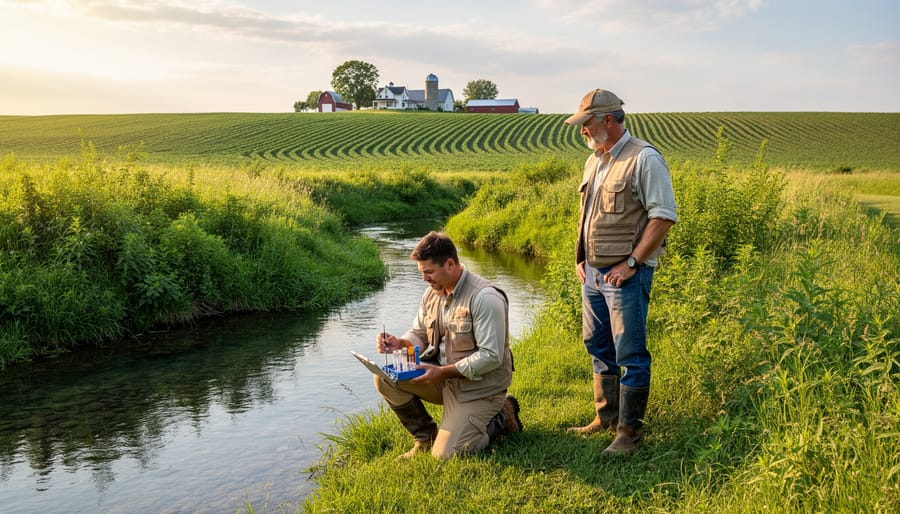
Recent farm surveys in Saskatchewan by Diane Knight and Steve Shirtliffe show that soils on organic farms are deficient in available phosphorus. Long-term rotation studies like those at Scott, SK and Glenlea, MB also indicate that phosphorus becomes a concern in organically managed plots. Furthermore research on Ontario organic dairy farms by Derek Lynch and others also indicates low levels of soil phosphorous. Should organic producers be worried?

Phosphorus is an essential plant nutrient. Plants need it to harvest energy from the sun, and both plants and animals (including us) need phosphorus for energy transfer, and as part of cell membranes and genetic material. When crops are removed from the farm, significant amounts of phosphorus are lost. The Canadian Fertilizer Institute estimates that a 40 bu/A wheat crop will remove about 25 lb/A of phosphorus, and 50 bu/A pea crop will remove about 35 lb/A.

Unlike nitrogen that can be literally pulled out of the air (with the help of appropriate microbes), phosphorus comes ultimately from rock. If phosphorus is continuously removed, eventually sources from off farm may be needed to balance exports of grain or meat. Some rock phosphates are approved for organic use.

Phosphorus is relatively abundant in our soils but only a small portion of it exists in soluble forms that plants and microbes can use, the form that is measured in standard tests of "available" soil phosphorus. The largest portion of the soil phosphorus is rock or mineral based. In prairie soils, it is generally bound into chemical complexes with calcium. These complexes, called apatites, can be chemically broken down to release phosphate ions, but this natural process is very slow under prairie conditions.

The deficiency of available phosphorus in organically managed soils indicates crops are removing the phosphates as quickly as they are being released from the rock. It also suggests that crop growth may be limited by the rate at which the phosphates become available.

Soil, of course, is much more than weathering rocks. A crucial portion of the soil phosphorus is bound into organic molecules, both in the dead material and in the living fraction of the soil. Legumes are very effective at scavenging phosphorus as it becomes available, so their residues can be phosphorus rich. Some weeds, such as Kochia, are good phosphorus scavengers, and so also make good phosphorus green manures. Animal manures are especially phosphorus rich.

Phosphorus cycles biologically among the three phosphorus pools - apatite, phosphate ions, and organic compounds. Phosphate ions are released from rocks and are taken up by plants, transferred to animals as they eat plants, and returned to the soil in animal wastes and in the bodies of plants and animals as they die. Soil organisms cycle these organic materials among themselves and back into phosphates that plants can use.

Microbes play a number of vital roles in cycling phosphorus. Some microbes, especially the type of fungi known as arbuscular mycorrhizae, partner with plants in a way that allows the plant increased access to phosphorus. Some microbes break organic matter down, releasing and recycling phosphates. Still other microbes produce chemicals that react with the apatite (the chemical complex of calcium and phosphorus that keeps the phosphorus unavailable), releasing phosphates. Some of these latter microbes add acids to the soil solution, making the phosphorus more soluble. Others act on the calcium, forming complexes that free the phosphorus.

Our understanding of soil biology is incomplete, but we do know that microbial activity in soils can be encouraged by reducing toxic chemical inputs, by reducing tillage and especially by increasing the organic matter in the soil, which feeds the microbes.

When synthetic phosphate fertilizers are used, the biological cycling of phosphorus may be of lesser importance. But biological cycling of phosphorus may be pivotal to the sustainability of organic farming. "Available" phosphorus in the spring may be less critical in organic systems if there is adequate organic matter to allow strong microbial activity. Microbes can make additional phosphorus available throughout the growing season, and times of active plant growth may coincide well with times of greatest microbial activity. The challenge comes in finding ways and systems that encourage phosphorus cycling. Researchers associated with the Organic Agriculture Centre of Canada are continuing to conduct tests.


I thank Jeff Schoenau and Diane Knight, soil scientists at the University of Saskatchewan, for sharing their expertise with me as I explored this topic.


Brenda Frick, Ph.D., P.Ag., is the Prairie Coordinator for the Organic Agriculture Centre of Canada at the College of Agriculture, University of Saskatchewan. She welcomes your comments at 306-966-4975 or via email at brenda.frick@usask.ca .

Top of Page

© 2006, Organic Agriculture Centre of Canada (OACC)