Taking a New Look at Green Manure Crops
By Brenda Frick and Yvonne Lawley
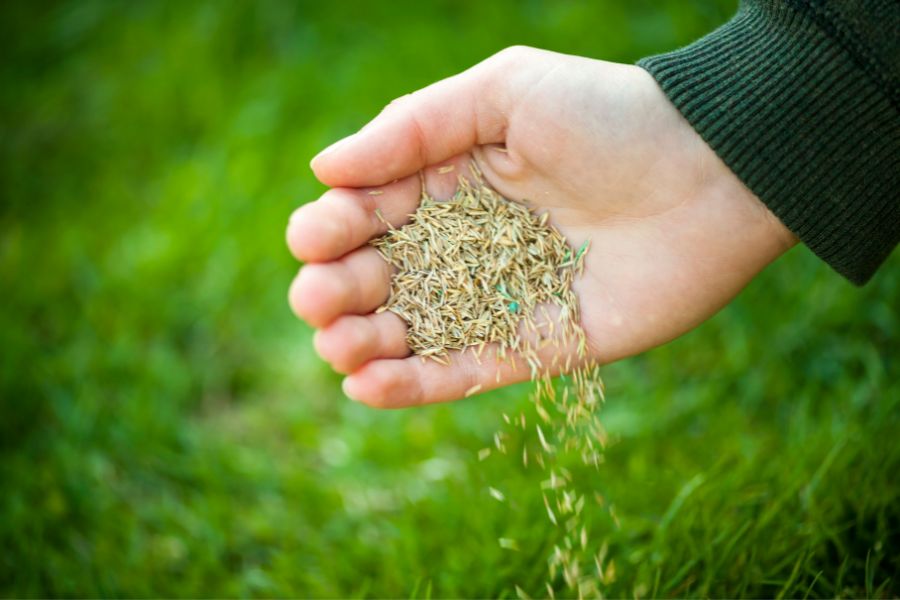
Green manure crops are grown for their green matter, which is incorporated
into the soil. Understanding the benefits of green manure crops will help
farmers select green manures and choose ways of managing them that work
best for them.
Many crops can be used as green manures: annual species such as pea, lentil,
chickling vetch, buckwheat, mustard, oilseed radish, and faba bean; winter
annual species like fall rye and winter wheat; biennial species like sweet
clover and red clover; and perennial species such as alfalfa and white
clover. Sweet clover is the most common green manure in Saskatchewan,
though alfalfa, pea, lentil, and chickling vetch are also common.
Green manures offer many benefits when included in a crop rotation. Green
manures can increase soil organic matter and improve soil structure. The
breakdown of crop residues stimulates biological activity in the soil.
Green manure crops also prevent erosion by providing a protective cover
during fallow seasons. Green manure crops can be essential to nutrient
cycling in organic cropping systems. They act as temporary nutrient storage
units that limit nitrogen losses from leaching or from processes that
make the nitrogen less available to plants during fallows. Green manure
crops break disease cycles and compete with weeds. They may also provide
habitat for beneficial insects, such as parasitic wasps, and some produce
chemicals that interfere with weed growth.
Legume green manure crops are an essential part of many organic crop rotations.
Legumes can add nitrogen through nitrogen fixation and deep rooted green
manure crops such as sweet clover and alfalfa can retrieve nutrients such
as nitrogen and phosphorous from deep in the soil profile. The crop residues
of the green manure are incorporated near the surface, so that when they
break down, these nutrients are made more available to subsequent crops.
A 2002 survey of 5% of organic farmers in Saskatchewan found fields were
less likely to be deficient in soil nitrogen if they had been in green
manure crops in the last 5 years.
Despite these many advantages, producers may hesitate to use green manure
crops. The green manure year is a year with no income, yet it still requires
the input of seed. Green manures can use up limited water reserves, and
small seeded crops can be difficult to establish. Weed control can be
difficult.
Many of the problems associated with green manure crop management can
be overcome with careful crop selection and crop management. Seed costs
are often less for smaller seeded crops, and a producer can reduce the
impact of seed costs by growing his or her own seed. Water depletion by
green manure crops can be reduced by terminating the crop early, and by
incorporating the green manure so that some material is left upright for
snow trap. Weed number and size are generally less when the green manure
seeding rate is higher. Weeds also add soil nitrogen and organic matter,
though they may interfere with the growth of the green manure crop. It
is generally recommended that green manures be terminated before weeds
set seed.
Green manure crops, with their many biological roles, are useful in low-input
cropping systems. Green manure selection and the management practices
chosen will depend on the producer's priorities in growing the green manure.
Short-term difficulties such as taking a field out of production for a
year can be balanced against long-term advantages such as reducing the
depletion of soil organic matter, soil nitrogen, and soil phosphorous.
This article was written with Yvonne Lawley a M.Sc. student in Plant Sciences
at the University of Saskatchewan under the supervision of Dr. Steve Shirtliffe.
Yvonne can be reached at yvonne.vandenbosch@usask.ca
Brenda Frick, Ph.D., P.Ag., is the Prairie Coordinator for the Organic
Agriculture Centre of Canada at the College of Agriculture, University
of Saskatchewan. She welcomes your comments at 306-966-4975 or via email
at brenda.frick@usask.ca
This article first appeared in
The Western Producer, and is published here on the OACC website with
permission.
|