Weeds – how to prevent new problems
B. Frick, E. Johnson - Scott Research Farm
Problem
Weeds enter farms and fields in various ways. Historically, most of our
weeds were introduced from Europe and other areas as a result of human
immigration to the prairies. On individual farms, weeds are introduced
from neighbouring farms, from suppliers, from road margin to field and
from field to field. How can we prevent new weeds establishing on farms?
Background
Introduction of weeds onto the farm can be slowed, but not halted, by
careful prevention and sanitation. Some seed movement is inevitable, due
to birds, mammals, movement during snow melt, etc.
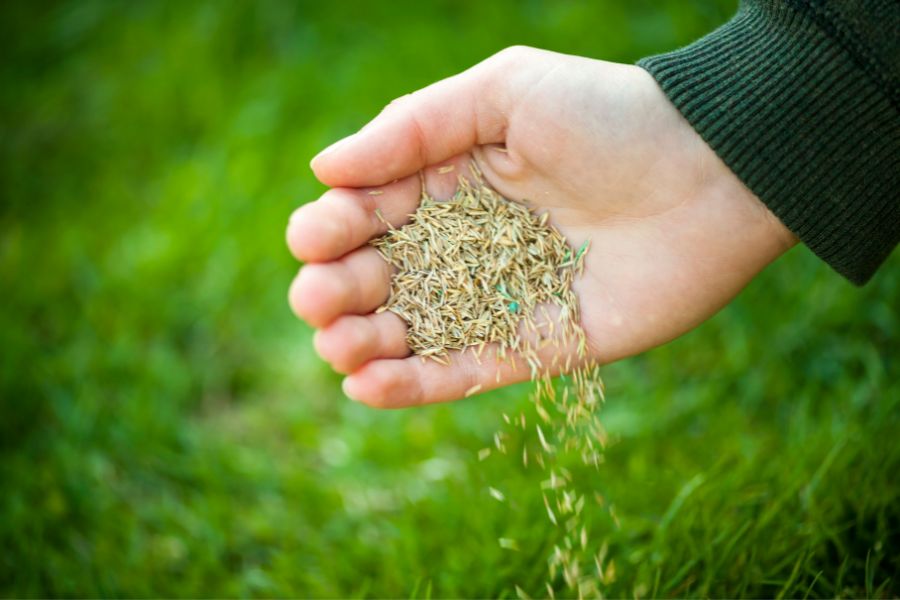
The first step in preventing weed introduction is to sow clean seed. Weed
seeds are found as contaminants in the seed from other farms, or in seed
cleaned at grain elevators. Weed seeds and vegetative parts can be transported
on equipment. It is a sound practice to thoroughly clean equipment that
moves between fields or beyond weed patches. This is especially important
if custom work is done. A tarp over grain, soil or feed being transported
will prevent contamination along roads or in yards.
It is often recommended that weeds be removed along fence lines, shelterbelts,
road allowances or in other non-crop areas to prevent them from spreading
to fields. However, only a few weeds on field margins pose a real threat
of spreading into adjacent fields. Complete elimination of field margin
weeds may damage beneficial insects that require weeds as host species.
If non-crop areas are especially weedy, they can be seeded to competitive
native grasses. Movement of Canada thistle into fields is reduced by having
the field margin sown to native species, rather than having an unsown
border. If these areas are mowed, delaying operations until late July
will allow ground nesting birds to raise their broods.
A chaff saver behind the combine can collect weed seeds. It is especially
good at collecting crop seeds that blow over and cause volunteer problems
in following years. It is also effective at removing large numbers of
seeds of later maturing weeds. This practice prevents some weed movement
within a field and provides useful livestock feed. Weed seeds should be
cooked, ground or pelleted before using as feed. Chickens are especially
good at destroying weed seed viability. Sheep, horses, swine and cattle
are progressively less effective at destroying weed seed viability. If
green feed contains weed seeds, it can be made into silage to destroy
them. Properly composting livestock manure should kill most weed seeds.
Conclusions
Weed movement onto farms and among fields can be slowed. Importing weeds
can be reduced by sowing clean seed, by purchasing only clean plant material
such as hay, and by cleaning equipment traveling among fields. Careful
management of non-crop areas can reduce weed movement into fields. Chaff
collection can reduce future weed problems.
Funding
Provided by the Canada-Saskatchewan Agri-Food Innovation
Fund
Contact information
Brenda Frick, Ph.D., P.Ag.
Prairie Coordinator
Organic Agriculture Centre of Canada
c/o Department of Plant Sciences
University of Saskatchewan
51 Campus Drive, Saskatoon
Saskatchewan, Canada S7N 5A8
Tel: (306) 966-4975
Fax: (306) 966-5015
Email: brenda.frick@usask.ca
en français
|