Livestock and other beneficial organisms for weed management
B. Frick, E. Johnson - Scott Research Farm
Problem
Many plants considered weeds in agricultural crops are actually highly
nutritious and palatable plants. Can livestock use weeds? Can we integrate
livestock and other weed eating animals into a weed control strategy?
Background
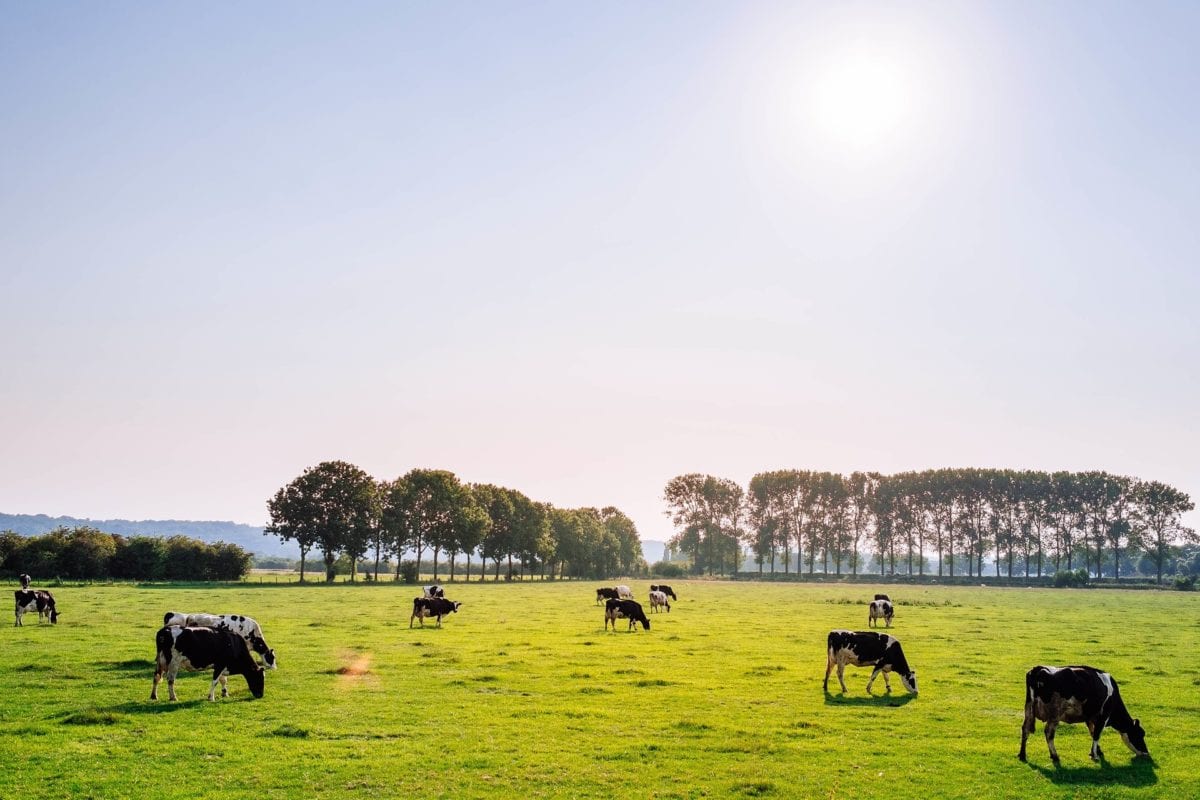
On mixed farms, livestock may be used directly to graze weeds, or consume
mown weeds, chaff, and screenings. Goats are browsers, and are especially
good at controlling woody plants, such as aspen or rose. Goats also eat
thistles. Sheep can effectively control leafy spurge. Once they acquire
a taste for it, sheep consume large quantities of spurge, which gives
them nutritious forage. Sheep are especially good for weed control, as
they graze close to the ground, and will readily eat thistles. In legume
crops, sheep will graze out grassy weeds. Geese have been used in garden
plots to control grassy weeds. Weeder geese can be used (at five to six
geese/hectare) after crops grow too large for birds to eat. Hogs, at 24
animals/hectare, can control perennial weeds between cropping seasons
in fenced fields. Cattle and sheep can be used for early grazing to prevent
weed growth. Weed regrowth faces strong competition from legumes and grasses
in pasture. If livestock are used to graze mature weeds, or to dispose
of screenings or chaff, digestion will destroy many, but not all, weed
seeds.
Livestock also have indirect benefits in a weed management system. Livestock
reclaim otherwise-useless things like screenings, chaff, patches mown
for weed control, and these practices become more viable for the producer.
Long-term rotations that include a perennial offer distinct benefits to
soil quality and weed management. Currently, the usual way to get alfalfa
or another perennial legume back into the rotation is to include livestock
as part of the production system. Options that generate the ‘livestock
advantage’ without livestock might also be pursued. For instance, dehy
and seed alfalfa producers might develop partnerships with livestock producers.Beneficial
creatures other than livestock may also be important in weed management.
They can be encouraged by maintaining habitat for them. This might include
reducing tillage, maintaining shelterbelts and wooded refuges, sloughs,
or borders, and leaving unbroken native land. Blind use of refuge habitats
is risky, because it is difficult to determine, at first, if creatures
harbored this way are beneficial or harmful. However, careful observation
should help make that decision. Our usual habit of viewing all non-domesticated
creatures as pests may be cautious, but it is unwarranted.
Biological agents in the soil can also affect competitive relationships
among crops and weeds. Some biological agents are available to improve
crop growth, such as the rhizobial inoculants used with legumes to support
nodulation or the fungal organism of Penicllium billai to solubilize inorganic
phosphorus in the soil. Arbuscular mycorrhizae (AM) can benefit plants
by facilitating nutrient uptake and improve growth and yield. These mycorrhizae
benefit some species such as cereals and legumes over species that do
not associate with them, such as wild mustard, lamb’s quarters, wild buckwheat,
tame mustard, canola and quinoa.
Other soil organisms can be directly detrimental to weeds. Seed-borne
bacteria may effectively reduce dormant weed seed populations. Rhizobacteria
have potential to reduce the vigor of grass weeds in cereal crops. Applying
microbial agents to control weeds may prove useful in the future. Reducing
tillage might foster growth of these bacteria, which actively grow on
crop residues, and are favored by the cooler, moister environment the
residues generate.
Helpful insects can be encouraged by providing habitat, such as shelterbelts
and ground cover. Increased weed seed predation has been observed with
cover crops. Reader reported that groundcover restricted seedling emergence
by providing a habitat for seed predators. High numbers of insects, snails,
slugs, and voles were reported in heavy residues of rye and hairy vetch
and it was felt that these organisms’ feeding decreased the number of
weed seedlings. Some carabid insects show a preference for species of
foxtail.
Conclusions
Livestock can be useful in weed management both as direct consumers of
weeds, and because livestock provide cost recovery for some weed management
practices such as chaff collection or mowing. Other beneficial organisms
can be encouraged by leaving natural environments within the farm ecosystem,
by reducing tillage, and by using chemicals judiciously.
Funding
Provided by the Canada-Saskatchewan Agri-Food Innovation
Fund
Contact information
Brenda Frick, Ph.D., P.Ag.
Prairie Coordinator
Organic Agriculture Centre of Canada
c/o Department of Plant Sciences
University of Saskatchewan
51 Campus Drive, Saskatoon
Saskatchewan, Canada S7N 5A8
Tel: (306) 966-4975
Fax: (306) 966-5015
Email: brenda.frick@usask.ca
en français
|